top of page
The St Helen's Canal,
Twin Entrance Locks.


Barges laden with goods approach the lock, ready for transportation to Garston Dock, 1920's.
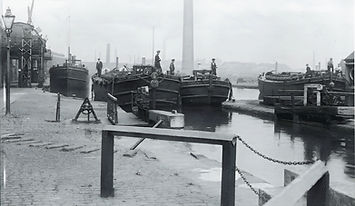

The Sankey Canal at Spike Island 1920's. The factory on the left is Gossages Soap Works and the chimney in the centre is Hutchinson‘s No 2 Chemical Works.

The entrance to the St Helens Canal from the river Mersey at Spike Island, Widnes.
The double locks to the canal are on the left, whilst to the right is the entrance to the wet dock. Opened nearly a hundred years earlier in 1833 at the terminus of the St Helens & Runcorn Gap Railway, it was the first purpose-built railway dock in the world. Here coal wagons were tipped into barges for onward shipment, 1920's.


The lock gates to St. Helens Canal, Widnes Dock, c1900's
Now located on the tranquil Spike Island these lock gates were in constant use before the 1950's when the canal was used to transport goods to and from Liverpool.
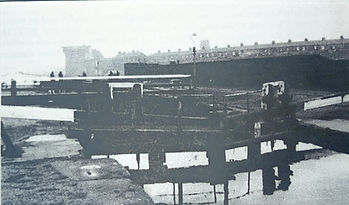
The Lock gates of the Sankey Canal, 1979.
The Lock gates of the Sankey Canal, 1979.

‘The Cut’, 1970's
On today’s Spike Island, men played the illegal gambling game Pitch and Toss. "There must have been 40 or 50 men down there gambling their wages. They were gathered by the lock keepers house. Like many boys I kept a look out for any "Coppers" by where the path to the Catalyst Science Discovery Centre is now.
John Yates. West Banker, 1940's.


A view of the Lock Keepers cottage, Spike Island, early 1900's.
Mr Axford the lock keeper is photographed next to the cottage he lived in and worked alongside. It was owned by the railway company. In the 1940's Mr Billy Riley was the lock keeper and lived with his two sons in the house.

The twin-entrance locks on the Sankey Canal 1985.
Working the Lock gates on the Sankey Canal in the 1960's.


The lock keepers house with Fairclough's flour mill in the background, Spike Island. 1920's
bottom of page