top of page

Gaskell Deacon Works

Henry Deacon, 1822-1876

GASKELL-DEACON WORKS, 1859.
This reproduction of an engraving of the early Gaskell-Deacon Works shows a typical Leblanc industrial scene and the rural environment in which the factories were then situated. The Garston-Warrington Railway, the Runcorn Gap Railway and the “New Cut," the three means of transport which determined the siting of the chemical factories, are all shown in the picture.

Sulphuric acid chambers, Gaskell-Deacon works, Widnes, 1870's.

A general view of Marsh Works from the north. Formerly the works of Niel Mathieson and Company, Marsh Works now form a part of the Gaskell-Marsh group of factories of the General Chemicals Division of Imperial Chemical Industries. Today this factory is principally engaged on the manufacture of sulphuric acid, by both the chamber and contact processes.

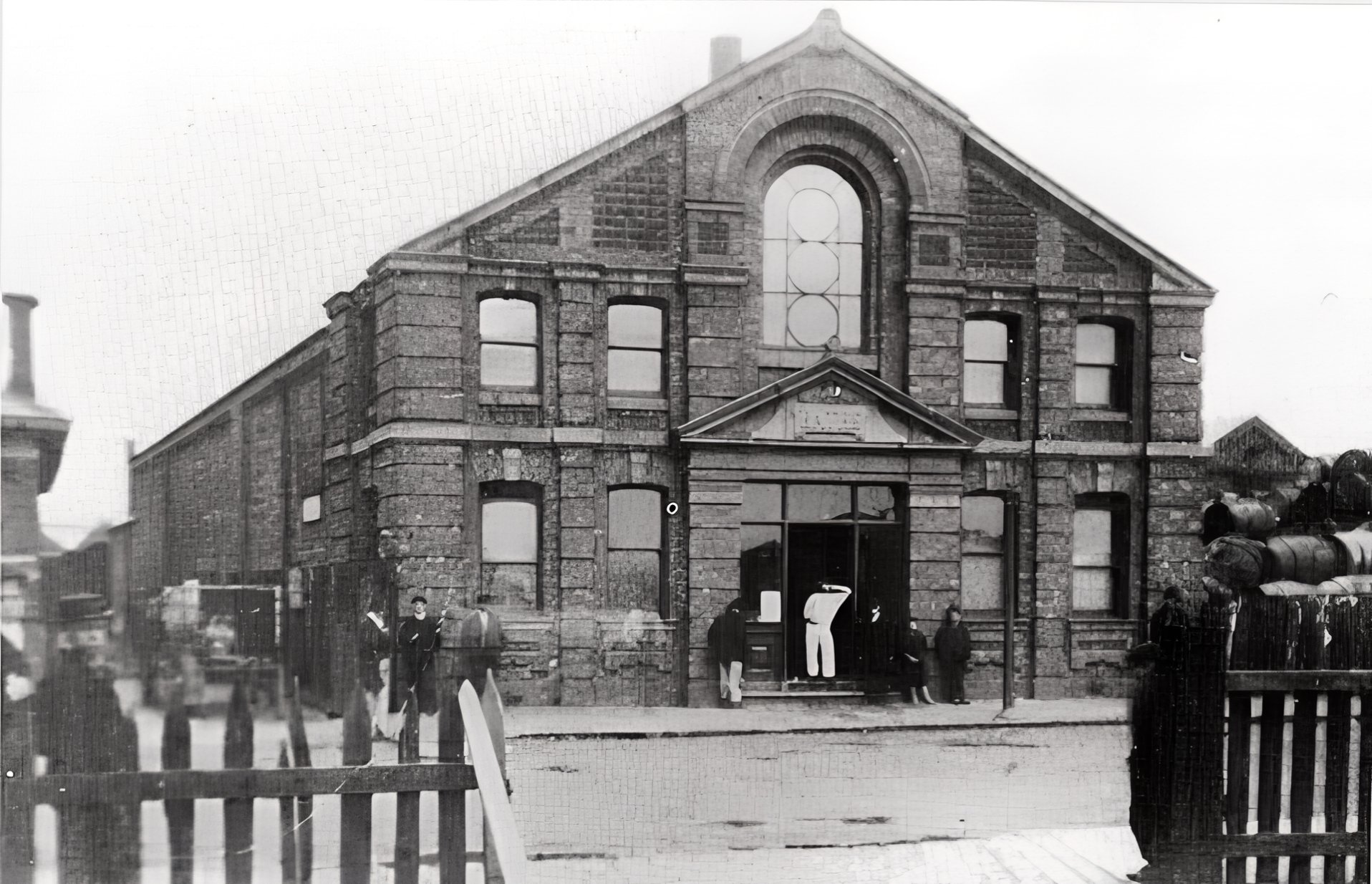
Gaskell Deacon Baths Waterloo Road.
These were built in 1885 by Holbrook Gaskell for his workers and the general public.

A photograph of the Coopers shop employees at the Gaskell Deacon Works, West Bank, Widnes, c1900.

An Advertisement for
Gaskell Deacon & Co, 1882. 

Bower's Brook

Bower's Brook 1950's & present day.
Right. The open Brook as it passes the former site of Frederic Muspratt's, Wood End Works. At this part the Brook runs parallel to the “New Cut," which is to be seen at the extreme right of the picture.
Left. All that remains of the former Bower's Brook Pool, the exit culvert of Bower's Brook into the Mersey.

This trout stream of pre-industrial Widnes has served for a century as the Cloaca Maxima, the chief chemical sewer of the Canal Region of the Widnes Chemical Industry.

Bower's Pool, 1859.

Bower's Pool, 1890.

Bower's Pool, 1921.

bottom of page